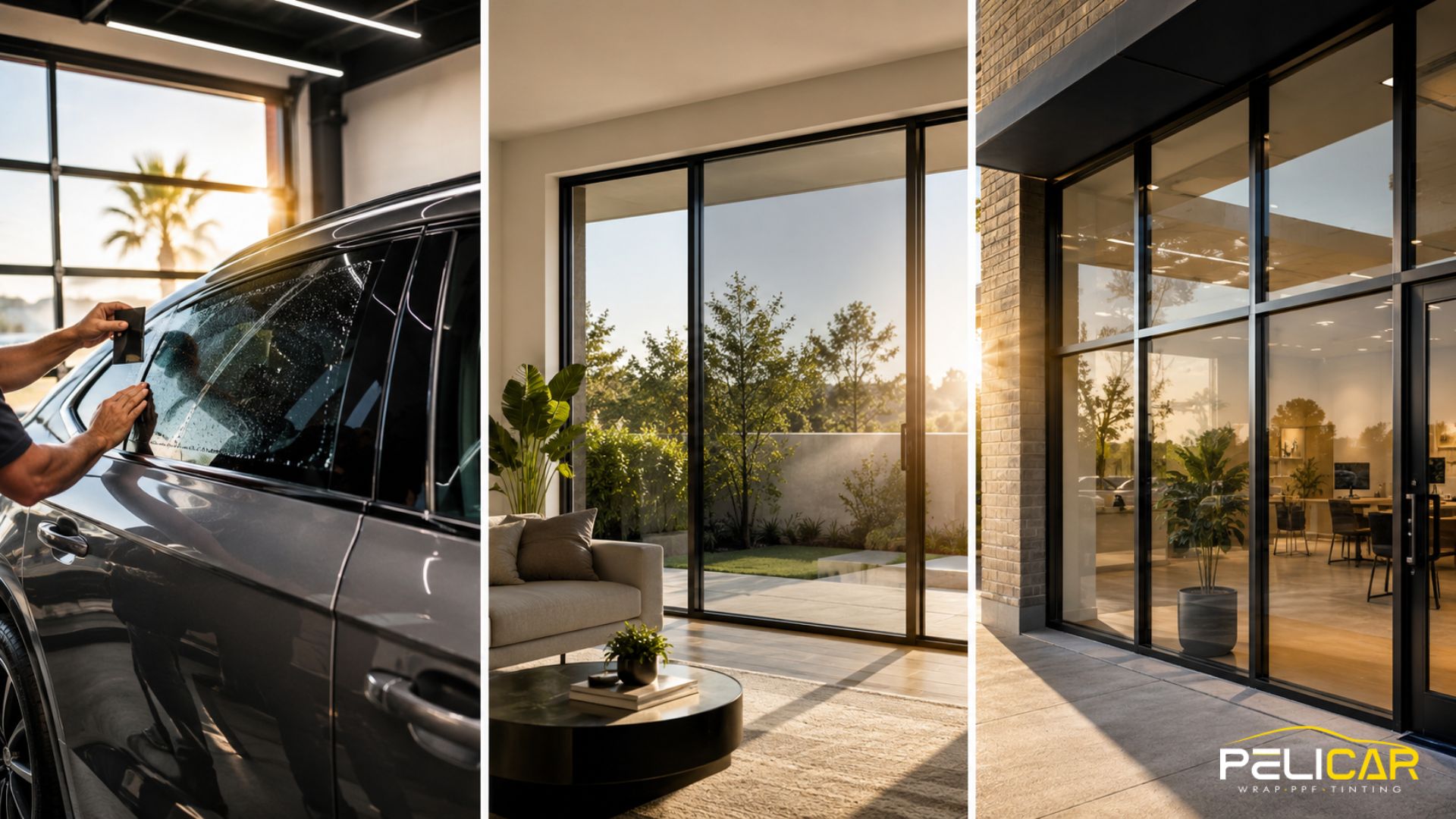
Security window film is primarily designed to strengthen existing glass and help hold broken fragments together after impact, while traditional home window tint focuses more on controlling solar heat, UV exposure, glare, privacy, and indoor comfort. Although the two can provide some overlapping benefits, they are engineered for different priorities and should not be considered interchangeable products.
That distinction matters for Malden homeowners because the reason for treating the glass can vary considerably from one property to another. Someone trying to make a sun-facing living room more comfortable has a different objective than someone looking to add another protective layer to accessible ground-floor windows. Choosing between security window film and traditional tint starts with identifying what you actually want the glass to do.
Professional window tinting services can then match those priorities with a film designed for the job, whether the main concern is comfort, protection, privacy, or a combination of several factors.
What Is Security Window Film Designed to Do?
Security window film uses a thicker, more durable construction to help retain fractured glass after an impact. Its primary job isn’t preventing glass from ever breaking. Instead, the film and its adhesive system work together to help keep broken pieces attached rather than allowing the pane to immediately separate into loose fragments.
The construction of these films is important. Greater film thickness can provide additional tear resistance, while strong adhesive bonds the material to the glass. Depending on the security system and application, attachment methods around the perimeter may also play a role in overall glass retention.
Where that added protection can matter
- Accidental impacts that would otherwise scatter broken glass
- Severe weather and debris striking residential windows
- Ground-level glass that may be more exposed to attempted forced entry
- Entry doors and windows located close to accessible exterior areas
- Situations where holding fractured glass together is an important safety consideration
There is an important limitation homeowners should understand: residential security window film does not make ordinary glass unbreakable. It also doesn’t transform a standard residential window into specialized security glazing. The purpose is to make the glass more resistant to immediate failure and help retain fragments after breakage, which may create an additional obstacle during certain forced-entry attempts.
At Pelicar, we’re careful about explaining that distinction because realistic expectations matter with any safety and security film. A properly selected glass protection film can add meaningful protection, but homeowners should understand exactly what the product is engineered to accomplish before having it installed.
What Does Traditional Home Window Tint Prioritize?
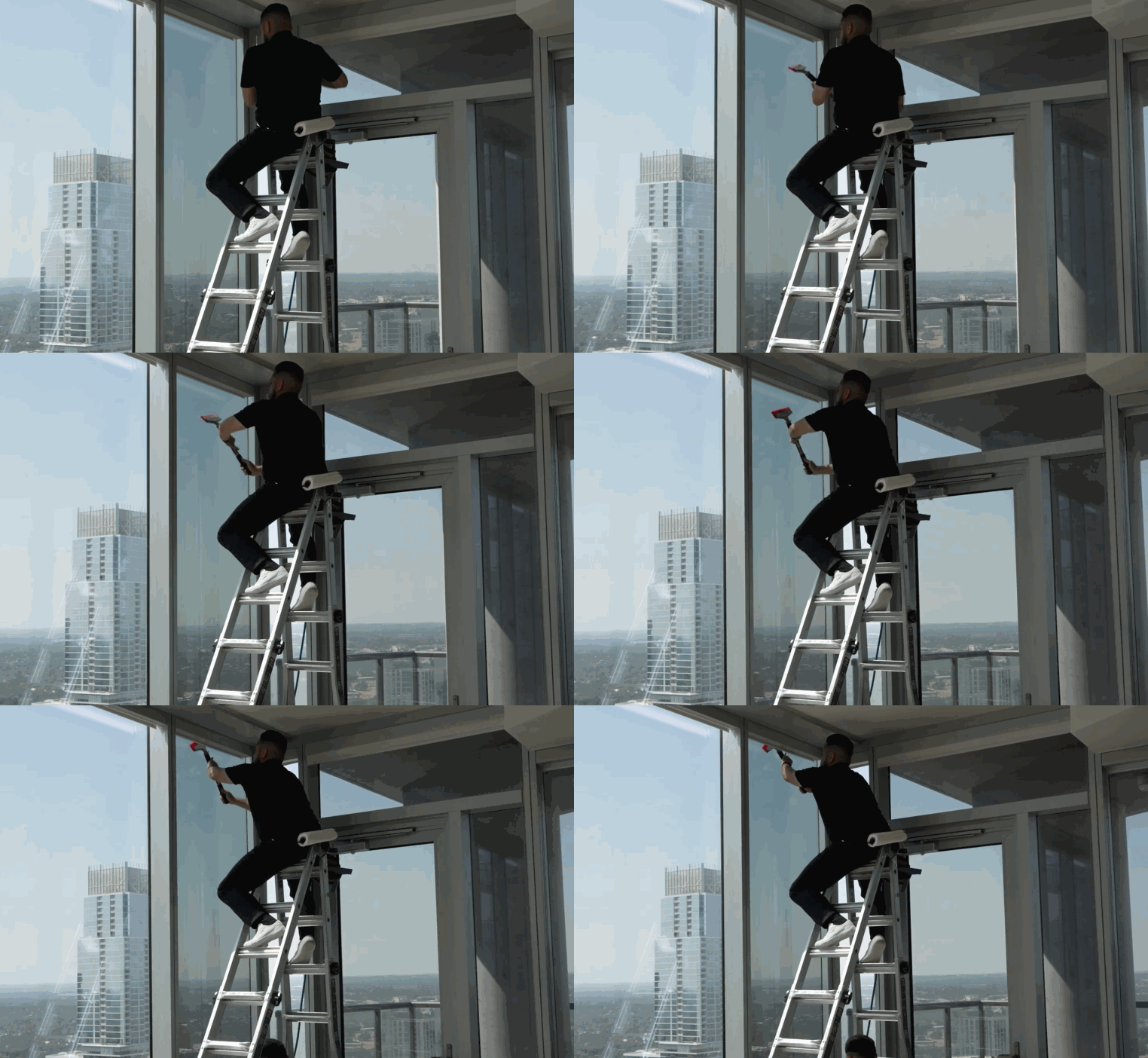
Traditional home window tint is primarily designed to manage sunlight and improve conditions inside the home rather than reinforce the glass against impact. Its value is usually measured by what changes on the interior side of the window: less solar heat, reduced glare, greater UV protection, and, with certain films, additional daytime privacy.
For rooms that receive strong direct sunlight, solar control window film can reduce the amount of solar energy passing through the glass. That can make spaces near large windows more comfortable without relying as heavily on blinds or curtains throughout the day.
UV protection is another major consideration. Flooring, furniture, artwork, upholstery, and other interior finishes can gradually fade after years of sunlight exposure. A quality UV protection window film helps reduce one of the major contributors to that deterioration.
Privacy can also be addressed differently depending on the film. Reflective and darker residential window tint products can limit views into a home under certain daytime lighting conditions while still allowing occupants to enjoy natural light and exterior views.
The practical advantage is that these improvements can often be added to existing glass. Rather than replacing an otherwise functional window solely to address sunlight or glare, homeowners can use heat rejection window film to change how that glass interacts with solar energy.
How Security Film and Traditional Tint Compare
The main difference between security film and traditional home window tint comes down to purpose. Security film is designed primarily to strengthen glass and help hold broken pieces together, while traditional tint focuses more on heat reduction, UV protection, glare control, and privacy.
Security film can provide some solar and UV benefits, depending on the product. Traditional residential window film may also offer certain protective qualities, but glass retention is generally not its main function.
At Pelicar, we recommend choosing based on what you actually want to improve. If glass protection is the priority, security film usually makes more sense. If your main concerns are heat, glare, fading, or privacy, traditional home window tint may be the better fit. For homeowners who want both, combination films can provide a balance of protection and comfort.
Why Malden Homes Can Have Different Window Film Priorities
The right residential window film depends partly on the property itself. Window orientation, existing glass, floor level, surrounding buildings, and the amount of direct sunlight a room receives can all change what homeowners should prioritize.
Malden’s housing stock makes that especially relevant. The city includes older single-family homes, multifamily properties, apartments, and buildings where window layouts can vary significantly from one room or floor to another. A south- or west-facing room with substantial afternoon exposure may have very different needs from a shaded ground-floor window near an entrance.
Massachusetts seasons add another variable. Summer sunlight can increase unwanted solar heat inside the home, while lower winter sun angles can create surprisingly intense glare. UV exposure remains a consideration throughout the year, even when outdoor temperatures are cold. For these situations, home window tint in Malden, MA may be selected primarily around solar control and interior preservation.
Security priorities tend to be more location-specific. Ground-floor windows, glass beside entryways, and other easily accessible areas may lead homeowners to consider a security-oriented product instead. A property doesn’t necessarily need the same film on every pane.
That’s one of the most useful things to understand about residential window film in Malden. Window protection in Massachusetts doesn’t have to mean choosing one product for the entire house. Different areas can be evaluated according to exposure, glass type, comfort needs, and security priorities, allowing the film selection to actually reflect how the home is built and used.
Can Security Window Film Also Reduce Heat and UV Exposure?
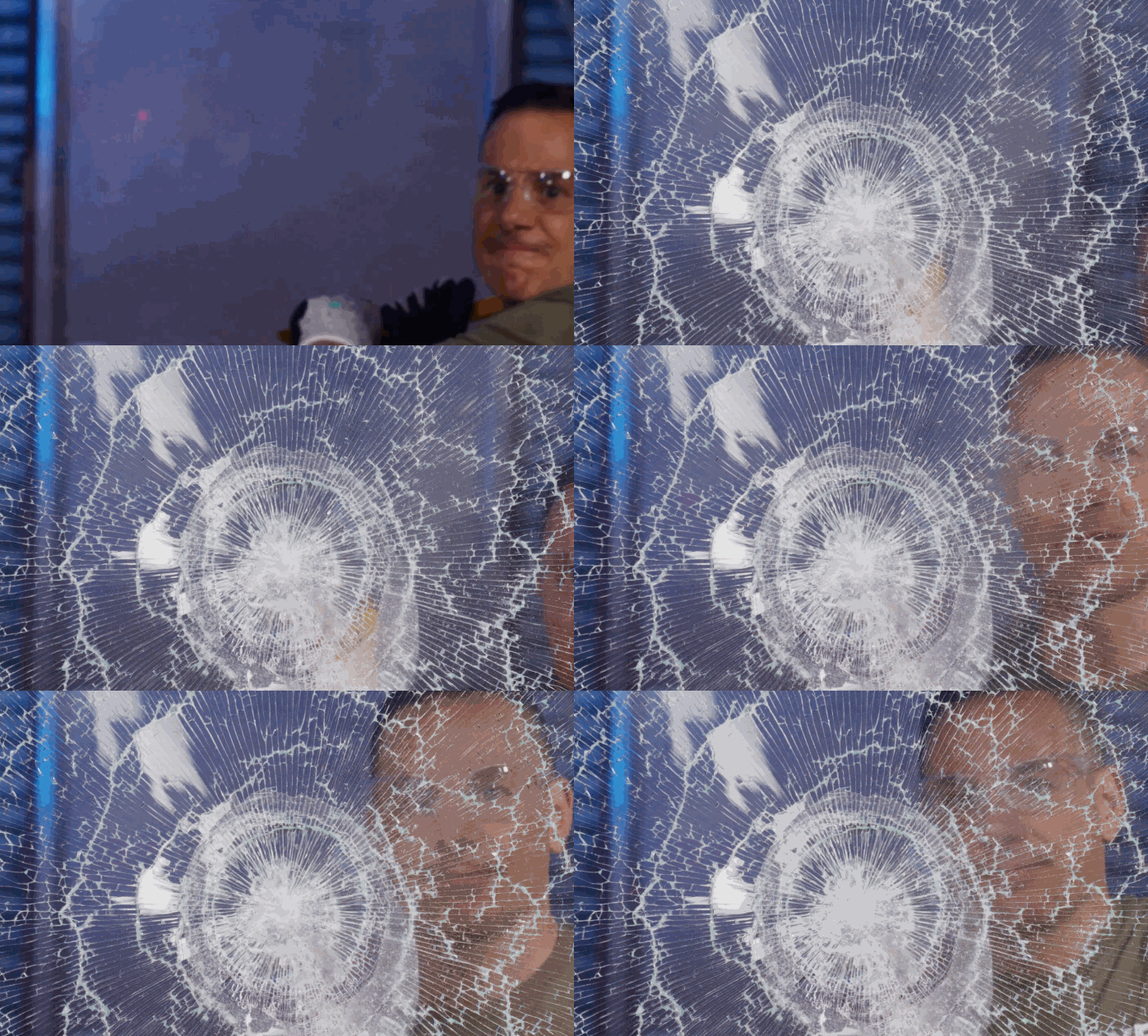
Yes, some security window films can reduce solar heat and UV exposure in addition to helping retain broken glass. The important distinction is that these secondary benefits vary considerably by product, so a film designed for security should not automatically be expected to perform like a dedicated solar-control film.
This is where product selection becomes more interesting. Manufacturers offer films that combine characteristics from both categories, giving homeowners an opportunity to address several concerns without treating the window twice.
When Combination Film Makes Sense
A security and solar window film may be appropriate when a homeowner wants added glass retention but also has windows responsible for uncomfortable heat or significant sun exposure. Depending on the product, these films can combine impact-oriented construction with features such as UV reduction, glare control, or solar energy rejection.
The trade-off is that performance should always be evaluated individually. A clear security film might offer excellent glass retention and UV protection but relatively modest heat rejection. Meanwhile, a dedicated heat control window film may provide stronger solar performance without being engineered for the same level of impact resistance.
That’s why specifications matter. When both protection and comfort are priorities, homeowners should compare factors such as film thickness, solar energy rejection, visible light transmission, and UV performance. A quality UV blocking window film can address one concern extremely well without necessarily being the strongest choice for another.
Choosing based on measurable performance rather than the product category alone helps ensure the finished window actually addresses the problems you wanted to solve.
Which Window Film Makes More Sense for Your Home?
Traditional home window tint generally makes more sense when your primary concerns are excessive heat, glare, UV exposure, fading, or privacy. Security film becomes the stronger candidate when glass retention and impact protection are higher priorities.
The easiest way to narrow down the best residential window film is to forget about products for a moment and start with the problem. What specifically would you like to change about your windows?
If afternoon sunlight makes one side of the house uncomfortable, solar-control film deserves attention. If fading furniture is the concern, UV performance becomes important. If accessible ground-floor glass is the priority, a security-oriented solution may make more sense.
Homes also don’t need to follow an all-or-nothing approach. Different home window tint options can be selected for different parts of the property. A sun-facing living room might benefit from solar film while glass near an entrance could call for a security-focused product. That flexibility is often more practical than forcing one film to perform every job throughout the house.
At Pelicar, this is how we approach residential projects. Before recommending a product, we consider the existing glass, what the homeowner wants to accomplish, and where those windows are located. Professional window tinting services should ultimately solve specific problems rather than simply put film on glass.
Why Professional Installation Matters for Residential Window Film
Correct product selection and installation directly affect how residential window film looks, adheres, ages, and performs. With home applications, that process starts before a piece of film is ever applied.
Not every residential window is constructed the same way. Glass thickness, pane configuration, coatings, window age, and other characteristics can affect film compatibility. An experienced installer should evaluate those factors before recommending a product, particularly when dealing with specialized solar-control or security films.
Several details influence the final result:
- Existing glass type and construction
- Compatibility between the glass and selected film
- Accurate sizing and preparation
- Clean application with properly finished edges
- Adhesive bonding and curing
- Attachment systems used in applicable security installations
Those details become especially important with security window film installation. Depending on the system, the film itself may be only one component of the overall approach. Proper edge attachment can influence how the filmed glass behaves after breakage, making it important to evaluate the installation as a complete system rather than simply choosing a thicker material.
Professional home window tint installation also protects the visual side of the project. Careful preparation helps minimize contamination, while accurate cutting and finishing create cleaner edges and a more integrated appearance.
Ultimately, quality residential window tinting services combine the right product with the right application. Both pieces need to work together if homeowners expect consistent performance over the long term.
Conclusion: Choosing Protection That Matches Your Priorities
Security window film and traditional home window tint solve different primary problems. Security products prioritize glass retention and impact resistance, while conventional residential films typically concentrate on solar heat, UV exposure, glare, privacy, and indoor comfort. Certain modern products can bridge that gap, but their individual specifications still matter.
For homeowners in Malden, the right choice can also change from one window to another. Massachusetts summer heat may make solar control important in rooms receiving direct afternoon sunlight, while winter glare, year-round UV exposure, privacy concerns, or accessible ground-floor glass can create entirely different priorities elsewhere in the property.
The goal isn’t necessarily to decide whether security film or traditional tint is universally “better.” It’s to determine what each window needs and select a product engineered to provide those particular benefits.
At Pelicar, we provide residential window tinting services and security window film solutions for homeowners throughout Malden. We can evaluate your existing glass, discuss what you want to improve, and recommend an option based on the actual priorities of your property.
If you’re considering film for your home’s windows, contact us today. We’ll help you compare your options and choose a solution that delivers the right balance of comfort, solar control, privacy, and glass protection for your Malden home.
4.7 STARS 773 Google reviews
Window tinting service in Malden, Massachusetts