A few years ago, most people shopping for window tint were mainly thinking about appearance. Darker glass, a cleaner look, maybe a bit more privacy. That’s still part of the conversation today, but around Malden, drivers have started paying much closer attention to performance.
You notice it during the middle of summer when traffic slows down near Route 60 and the sun sits directly against the side of your vehicle for twenty minutes straight. Or after leaving your car parked near Malden Center or Oak Grove Station for the afternoon and coming back to a cabin that feels significantly hotter than the temperature outside. Those are the situations pushing more drivers toward ceramic window tint instead of traditional film options.
What’s interesting is that ceramic tint isn’t popular because it makes windows extremely dark. In fact, many drivers choose it because it improves comfort without dramatically changing visibility. Better heat rejection, reduced glare, and improved UV protection have become bigger priorities than simply making a vehicle look different.
At our shop, we’ve seen more people asking detailed questions before making a decision. They want to understand how the film actually performs during daily driving in Massachusetts, not just how it looks on day one. That’s why we wanted to put together an honest breakdown of ceramic window tint and how it compares to other window tinting services available in Malden.
What Makes Ceramic Window Tint Different From Traditional Films?
The easiest way to explain ceramic window tint is this: it’s designed to block heat more intelligently, not just darken the glass.
Traditional dyed tint mainly focuses on appearance and basic shading. Carbon film improves durability and cuts down some heat, but ceramic window film goes a step further by using non-metallic ceramic particles engineered to reduce infrared heat and UV exposure without interfering with visibility or electronic signals.
Here’s where ceramic tint stands apart:
- Better heat rejection without needing extremely dark glass
- Strong UV protection that helps reduce interior fading over time
- Clearer visibility compared to some lower-grade films
- No interference with GPS, Bluetooth, phone signals, or radio reception
- More stable long-term performance with less fading or discoloration
What surprises a lot of drivers is that ceramic tint technology doesn’t rely on darkness to perform well. That’s one of the reasons it’s become so popular for modern vehicles, especially for drivers who want comfort without making their windows look excessively tinted.
At Pelicar Window Tinting, a big part of our job is helping people understand these differences in realistic terms. A lot of customers come in expecting every automotive window tint product to behave the same way, but once they compare the performance side by side, the differences become much easier to feel than to explain.
How Ceramic Window Tint Performs During Massachusetts Summers
Summer driving around Malden has a way of exposing every weak point in a vehicle’s interior comfort. The heat doesn’t always hit all at once either. Sometimes it builds gradually during a long afternoon parked outside. Other times, it’s sitting in traffic around Greater Boston while sunlight keeps pouring through the side glass without relief.
That’s where ceramic tint benefits become noticeable almost immediately.
One thing we hear often from drivers after installing ceramic window tint is that the cabin simply feels more stable throughout the day. The seats don’t heat up as aggressively. The steering wheel becomes manageable faster after parking outside. Even when temperatures climb during July and August, the interior doesn’t feel like it’s constantly absorbing heat.
For drivers regularly moving through busy areas near Malden Center or commuting toward Boston, heat rejection window tint changes the experience in a very practical way. The AC system doesn’t have to work as aggressively just to maintain a comfortable temperature, especially during slower traffic conditions where sunlight stays concentrated on the vehicle for longer periods.
There’s also the long-term side of it. UV protection window tint helps reduce stress on interior materials that spend hours exposed to sunlight throughout the year. Dashboards, leather, trim pieces, and screens all take less punishment over time, which becomes increasingly important for people planning to keep their vehicles long term.
Is Ceramic Window Tint Worth the Higher Cost?
Ceramic window tint usually costs more upfront, and honestly, that part shouldn’t be avoided or sugarcoated. Compared to basic dyed film, the difference in pricing can be noticeable. The real question is whether the long-term experience justifies that extra investment.
For many drivers, it does, but not always for the reasons they expect.
The value tends to show up little by little rather than all at once. You start noticing your car cooling down faster after sitting outside. You rely less on max AC during summer afternoons. The interior materials hold up better over time instead of constantly baking under direct sunlight.
That’s where premium window tint separates itself from lower-tier options. It’s not only about aesthetics anymore. It’s about reducing daily discomfort and preserving the vehicle itself in ways people usually don’t think about until years later.
Why some drivers decide the upgrade is worth it:
- Better long-term comfort during daily commuting
- Improved protection against fading and interior wear
- Reduced heat buildup without sacrificing visibility
- More consistent performance over the years
- Less strain on cooling systems during warmer months
When people ask us “is ceramic window tint worth it,” the answer usually depends on how they use their vehicle. Someone driving occasionally on weekends may not prioritize performance the same way as someone spending hours every week commuting through Malden and surrounding Boston areas. From our experience, the more time you spend inside your car, the easier it becomes to appreciate the difference.
Situations Where Ceramic Window Tint Makes the Biggest Difference
Not every vehicle experiences the same conditions throughout the day, which is why some drivers notice the advantages of ceramic tint much faster than others.
Certain driving habits and parking situations naturally create more exposure to heat and glare, especially around Malden and nearby Boston neighborhoods where outdoor parking and daily commuting are common.
- Drivers commuting daily through Boston traffic often deal with extended sun exposure during slower driving conditions
- Vehicles parked outdoors near apartment buildings, Oak Grove Station, or busy streets absorb heat for hours at a time
- People sensitive to glare usually notice improved driving comfort very quickly
- Families spending long periods in the car during summer trips appreciate the more controlled cabin temperature
- Owners of newer vehicles often prioritize protecting dashboards, leather, and interior surfaces from long-term UV exposure
This is why automotive window tint solutions shouldn’t really be approached as one-size-fits-all products. Different drivers care about different things, and the right film depends heavily on how the vehicle is actually used.
At Pelicar Window Tinting, those conversations are a big part of what we do. Some drivers prioritize appearance, others care mostly about comfort or long-term protection.
Matching ceramic window tint in Malden to those real driving habits usually leads to better results than simply choosing the darkest film available.
Why Installation Quality Matters With Ceramic Window Tint
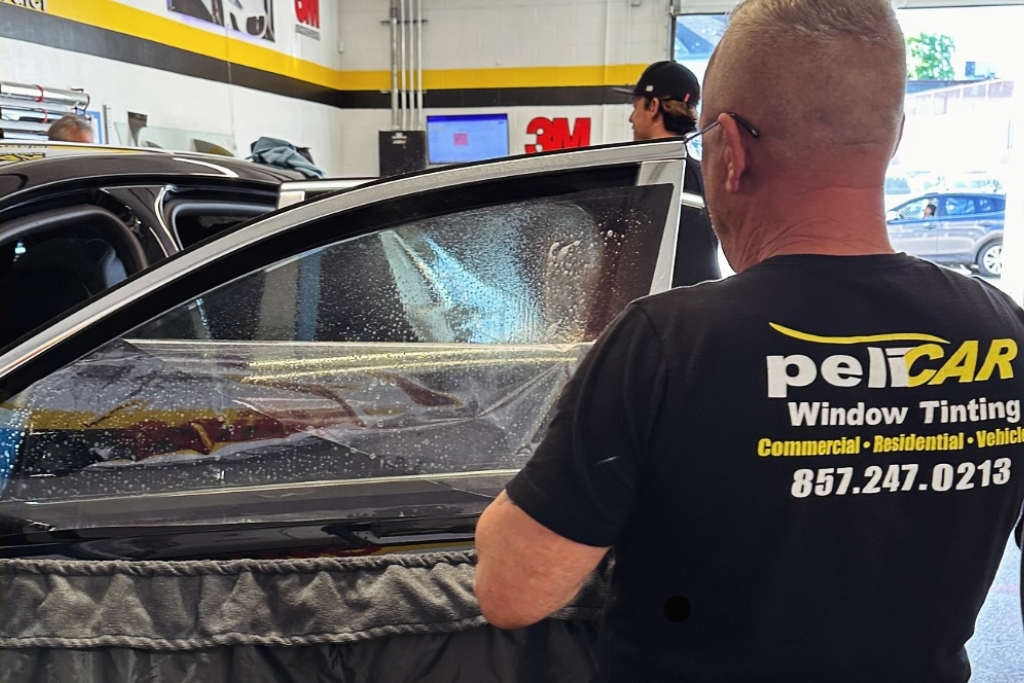
A lot of people assume that once they choose a premium ceramic film, the hard part is over. In reality, the installation itself has just as much influence on the final result as the film you purchase.
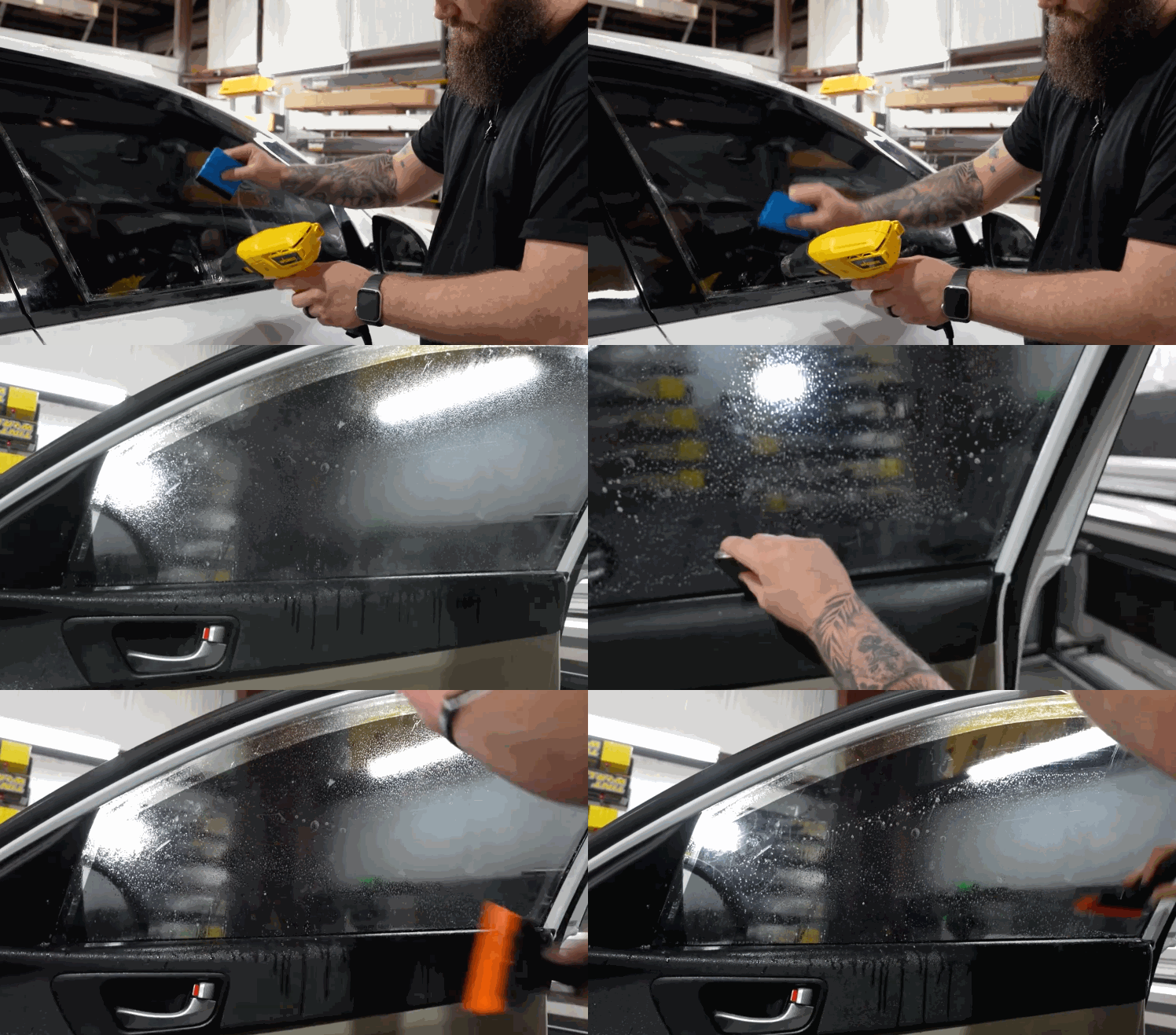
Ceramic window tint is designed to perform at a high level, but only when it’s installed correctly. That means precise measurements, clean edges, proper shrinking techniques, and an environment controlled enough to minimize dust or contamination during application. Small mistakes become much more noticeable with high-performance films because clarity and finish are part of what people are paying for in the first place.
What professional installation actually affects
- Optical clarity when driving during bright daylight or nighttime conditions
- Film adhesion and how well the tint settles over time
- Edge alignment and overall appearance of the finished glass
- Long-term durability, especially during seasonal temperature changes in Massachusetts
- Heat rejection consistency across all windows
The curing process matters too, and that’s something drivers don’t always hear about beforehand. After installation, the film needs time to properly bond to the glass. Rushing that process or exposing the windows too early to moisture and movement can affect the final finish.
Poor installation is usually what leads to issues people associate with “bad tint”, bubbling, peeling corners, distorted visibility, or uneven application. In most cases, those problems are less about the material and more about the execution behind it.
That’s why professional window tint installation is such a major part of quality window tinting services in Malden MA. The film can only perform as well as the installation allows it to.
Common Misunderstandings About Ceramic Window Tint
Ceramic tint gets talked about a lot online, but not always accurately. One of the biggest misconceptions is that it’s mainly about making windows darker or giving the car a more aggressive look. In reality, most of the value comes from performance rather than appearance.
There are also a few assumptions we hear repeatedly from drivers who are researching ceramic tint for the first time.
- Ceramic tint can reject significant heat even when the glass remains relatively light in appearance
- Higher pricing usually reflects material quality and performance, not just branding or luxury marketing
- Two ceramic films may look similar visually while performing very differently in real conditions
- Massachusetts visibility laws still apply, even with premium ceramic products
- Glare reduction during colder months can improve driving comfort year-round, not only in summer
This is why understanding ceramic window film benefits requires looking beyond aesthetics. The technology behind the film is what changes the experience inside the vehicle, especially during long drives, bright afternoon conditions, or extended parking outdoors.
At Pelicar Window Tinting, we spend a lot of time helping drivers separate marketing language from real-world performance. Not every ceramic product behaves the same way, and choosing the right option usually depends more on driving habits and expectations than simply picking the darkest film available.
Conclusion: A Smarter Long-Term Upgrade for Malden Drivers
Ceramic window tint has become increasingly popular around Malden because drivers are starting to prioritize performance in a more practical way. Comfort during summer traffic, reduced glare throughout the year, protection against UV exposure, and long-term durability all make a noticeable difference once you spend enough time behind the wheel.
At the same time, the film itself is only part of the equation. Choosing the right product for local driving conditions and making sure it’s installed properly are what determine how well the tint performs over time. That’s especially important in Massachusetts, where changing seasons and daily driving conditions constantly put stress on both the vehicle and the film.
At Pelicar Window Tinting, we approach ceramic tint from that real-world perspective. We work with drivers throughout Malden who want honest recommendations, strong performance, and professional installation that actually holds up long term.
If you’ve been considering ceramic window tint for your vehicle, contact Pelicar Window Tinting today. We’ll help you compare your options, answer your questions clearly, and find the right solution for your daily driving needs in Malden, MA.
4.7 STARS 773 Google reviews
Window tinting service in Malden, Massachusetts