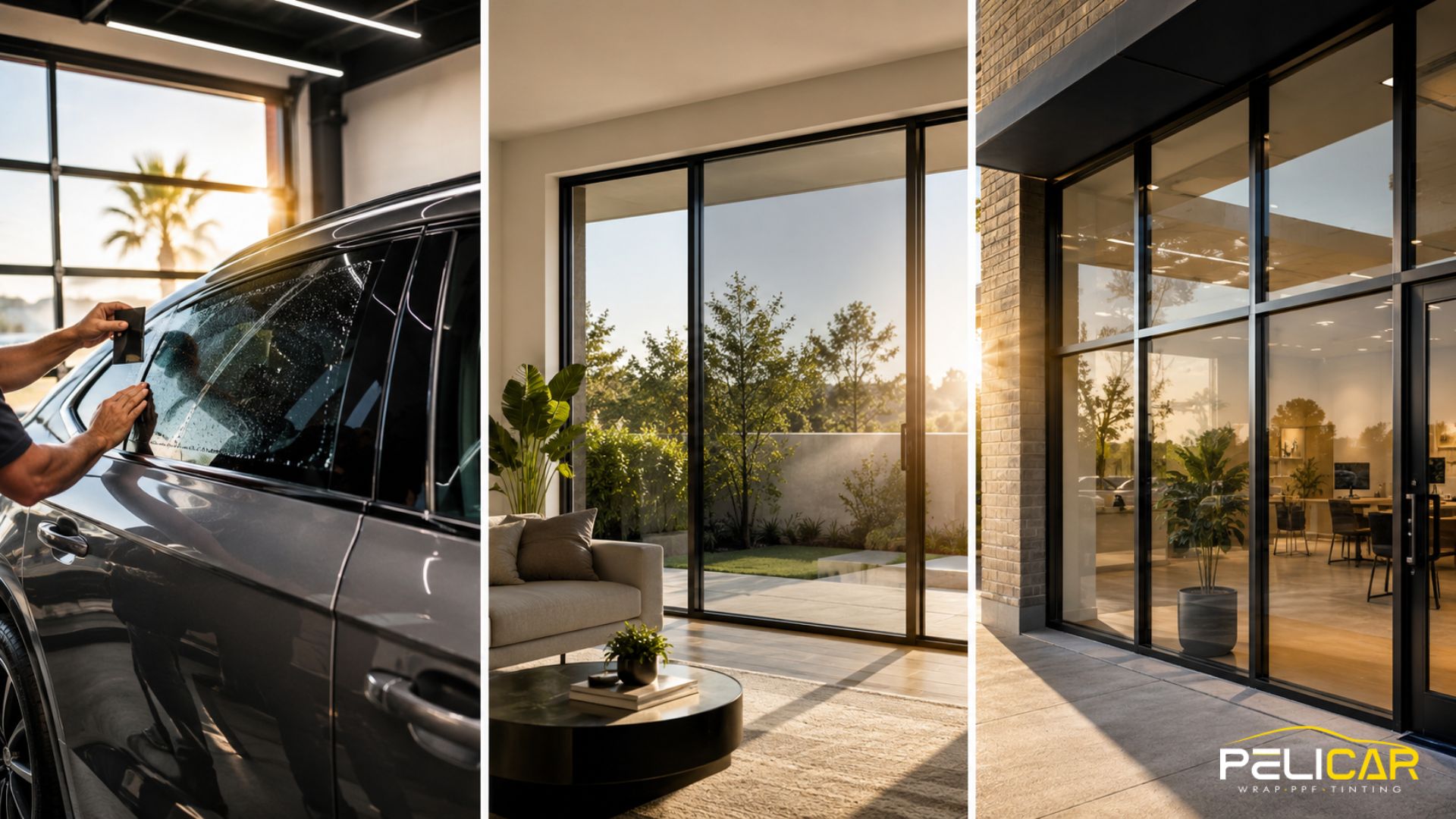
The best window tint percentage depends on how and where you drive, your preferred level of comfort, your visibility needs, and Massachusetts window tint laws. For most daily drivers, the goal isn’t choosing the darkest film, but finding the right balance between heat rejection, glare reduction, privacy, and clear visibility during both day and night.
Modern window tint technology also plays a major role in performance. Two films with the same window tint percentage can provide very different levels of heat rejection and UV protection depending on the material they’re made from. That’s why choosing quality film and professional window tinting services is just as important as selecting the percentage itself.
What Does Window Tint Percentage Actually Mean?
Window tint percentage refers to Visible Light Transmission (VLT), which measures how much visible light is allowed to pass through the glass. A higher VLT percentage means more light enters the vehicle, while a lower percentage creates a darker appearance because it blocks more visible light.
For example, a 70% VLT window tint allows about 70% of visible light through the window, creating a subtle appearance with minimal darkening. A 20% tint allows much less light to enter, resulting in noticeably darker glass. Although the percentage affects appearance and visibility, it does not automatically indicate how well the film blocks heat.
This is one of the most common misconceptions about automotive window tint. Heat rejection depends largely on the film’s technology rather than its darkness. Premium ceramic films, for example, can reject significantly more infrared heat than traditional films with a similar VLT.
At Pelicar, we spend time helping customers understand what the numbers actually mean before recommending a product. Once drivers understand the relationship between window tint percentage, visibility, and performance, it’s much easier to choose a film that fits both their vehicle and their daily routine.
Which Window Tint Percentages Are Most Popular for Daily Drivers?
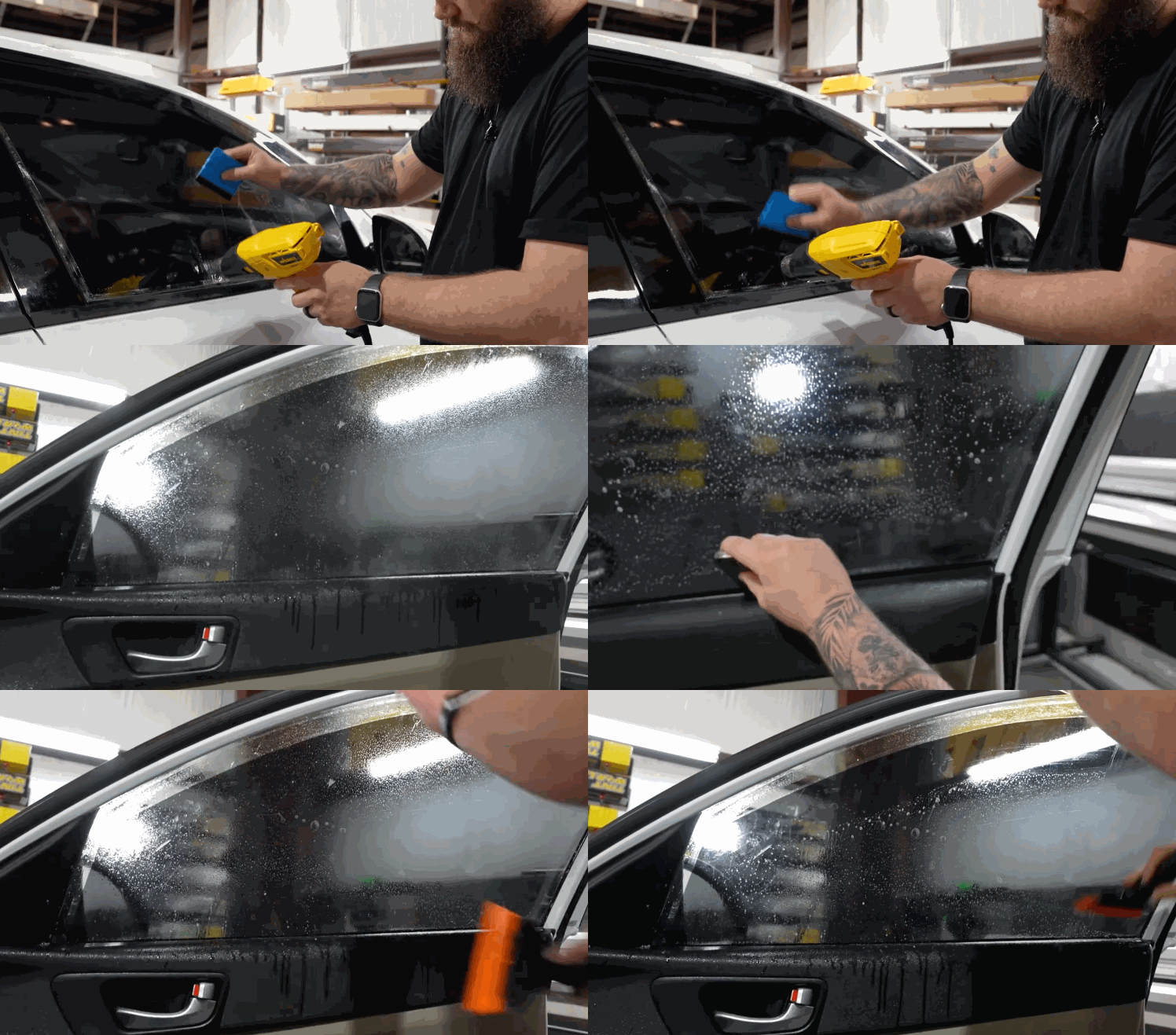
There isn’t a single best window tint percentage for every driver because everyone’s priorities are different. Some people value maximum visibility, others want additional privacy, while many are looking for the best combination of comfort, appearance, and everyday practicality.
Popular window tint options for daily driving
- 70% VLT: Maintains a factory-like appearance while reducing glare and preserving excellent visibility.
- 50% VLT: A popular choice for drivers who want light heat reduction with outstanding nighttime visibility.
- 35% VLT: Often considered the best balance between comfort, privacy, appearance, and everyday usability.
- 20% VLT: Provides significantly more privacy but may only be appropriate where legally permitted.
- Personal preferences: Driving schedule, parking conditions, comfort expectations, and visibility needs all influence the ideal choice.
Rather than asking which percentage is objectively the best, it’s usually more helpful to ask which window tint options best match the way you actually use your vehicle. Daily driver window tint should improve comfort without sacrificing the visibility and confidence you rely on every day.
How Massachusetts Window Tint Laws Affect Your Choice
Massachusetts window tint laws should always be part of the decision before selecting a tint percentage. Even if a darker film looks appealing, choosing a product that complies with state regulations helps avoid unnecessary inspections, citations, or having to remove and replace the tint later.
Legal window tint Massachusetts requirements specify how much visible light must pass through different vehicle windows. While these regulations establish the legal limits, they don’t necessarily determine which option will provide the best driving experience. Factors such as visibility, comfort, and the type of film remain equally important when making a final decision.
Because window tint regulations can change or vary depending on the vehicle, it’s always worth confirming the current legal requirements before installation. Working with experienced local professionals helps ensure you choose a film that delivers the performance you want while remaining compliant with Massachusetts window tint laws.
Choosing Tint Based on How You Use Your Vehicle
The way you use your vehicle often matters more than appearance when selecting window tint. A film that works perfectly for one driver may not be the ideal choice for someone with a completely different daily routine.
Consider how your vehicle is used
- Daily commuting between Malden and Boston where glare and traffic are part of the routine
- Frequent highway driving that increases exposure to direct sunlight for extended periods
- Outdoor parking throughout the workday where cabin temperatures rise significantly
- Evening or nighttime driving that benefits from maintaining excellent visibility
- Family vehicles where passenger comfort and UV protection become higher priorities
Drivers throughout Malden experience a wide variety of conditions, from neighborhood streets to busy highways leading into Greater Boston. Choosing automotive window tint solutions based on those real-world driving habits often leads to better long-term satisfaction than selecting a film based only on appearance.
At Pelicar, we focus on recommending heat rejection window tint that matches how each customer actually drives. By understanding where your vehicle spends most of its time, we can help you select window tint for daily driving that delivers the right combination of comfort, visibility, and long-term performance.
Why Film Technology Can Matter More Than Tint Percentage
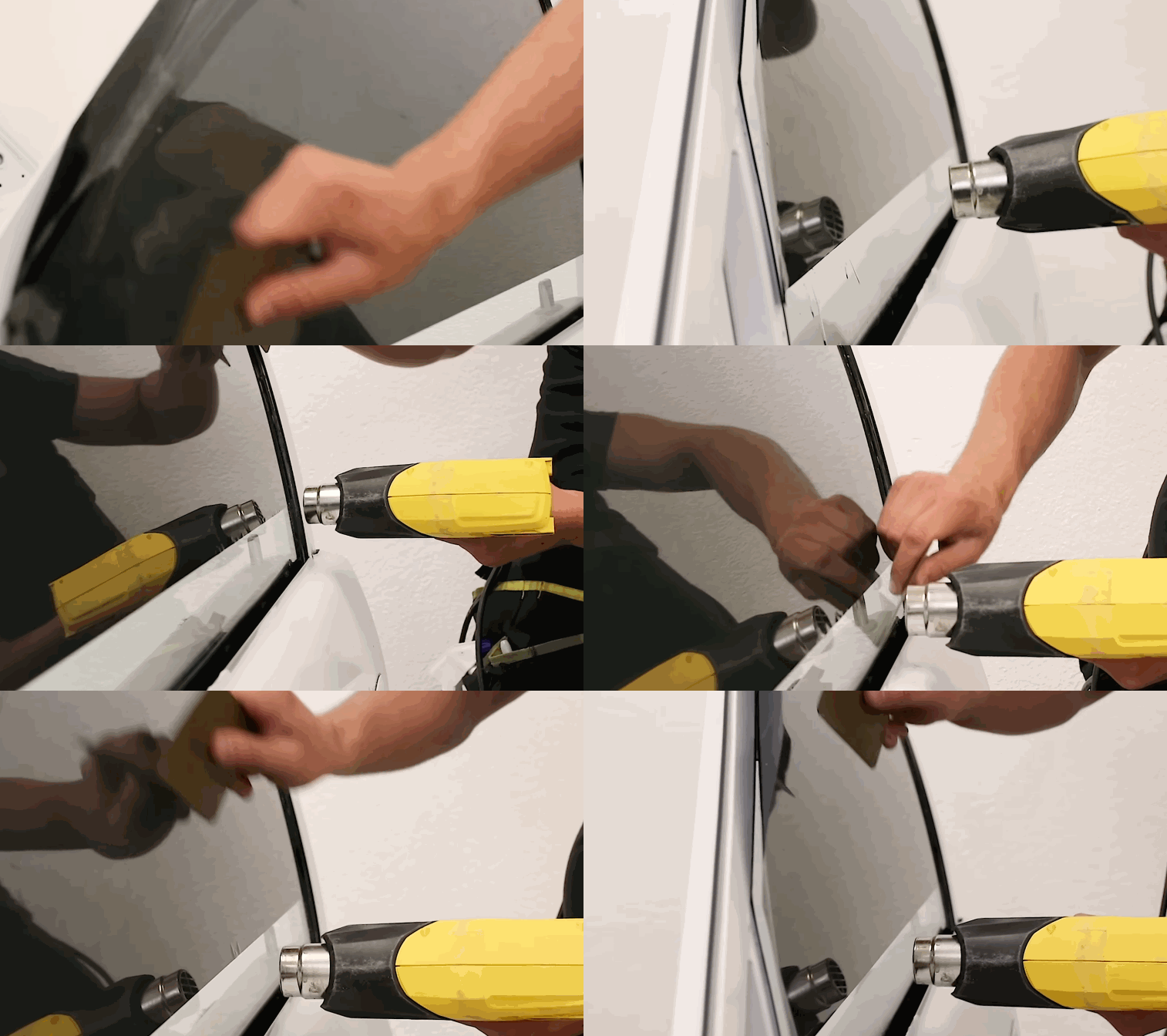
Two window films with the same Visible Light Transmission (VLT) can perform very differently because the materials inside the film determine how effectively they reject heat, block UV rays, and maintain visibility. That’s why tint percentage alone doesn’t tell the full story.
Looking beyond the percentage
Dyed films primarily improve appearance and reduce brightness, but they typically provide the lowest level of heat rejection.
Carbon films offer better thermal performance while helping maintain a rich, fade-resistant appearance. They provide noticeable improvements in comfort compared to traditional dyed products.
Ceramic window tint delivers the highest level of performance by blocking a significant amount of infrared heat without relying on an extremely dark appearance. It also provides outstanding UV protection and excellent optical clarity, allowing drivers to enjoy a cooler cabin while maintaining clear visibility.
When comparing films, focusing on heat rejection window tint performance usually leads to better long-term satisfaction than focusing only on darkness. A premium window tint built with advanced technology often outperforms darker, lower-quality films in the areas that matter most during everyday driving.
Common Misconceptions About Window Tint Percentage
Many drivers misunderstand what window tint percentage actually measures. The number only describes how much visible light passes through the glass, not the overall quality or performance of the film itself.
Common myths about window tint
- Darker tint does not automatically block more heat.
- Higher VLT does not mean weaker UV protection.
- Every vehicle does not require the same tint percentage.
- Appearance and performance are two different characteristics.
- Professional recommendations often produce better results than relying solely on online opinions.
A proper window tint comparison should always include the film’s technology, heat rejection capabilities, UV protection, warranty, and intended use. Looking only at the percentage often leads people to overlook products that could deliver much better everyday performance.
At Pelicar, we help customers sort through these window tint misconceptions by comparing films honestly and explaining the strengths of each option. Our goal is to recommend automotive window tint that fits your driving habits, not simply the film that appears darkest on the sample display.
How to Choose the Right Window Tint for Your Lifestyle
The right window tint combines legal compliance, everyday comfort, clear visibility, and long-term performance. Rather than asking which percentage is best for everyone, it’s more useful to determine which option best supports the way you use your vehicle.
If your car spends most of the day parked outside, prioritizing heat rejection may be more important than additional privacy. Drivers who frequently travel at night may prefer lighter films that maintain excellent visibility, while commuters who spend hours on busy highways often appreciate films that reduce glare and cabin temperatures. Every driving routine creates a slightly different set of priorities.
Choosing quality film deserves just as much attention as selecting the tint percentage itself. Advanced materials provide better durability, stronger UV protection, and more effective thermal performance over time, allowing you to enjoy the benefits for years instead of only during the first summer.
When drivers ask us about the best window tint Malden has to offer, we always begin by understanding how they use their vehicle. From there, our professional window tinting services allow us to recommend automotive window tint that balances performance, comfort, appearance, and legal compliance for everyday driving.
Conclusion: Finding the Right Balance for Everyday Driving
The best window tint percentage ultimately depends on your driving habits, Massachusetts regulations, and the level of performance you expect from your vehicle. There isn’t a universal answer because every driver values comfort, visibility, privacy, and appearance a little differently.
What remains consistent is the importance of choosing quality film instead of focusing only on the percentage printed on the sample. Modern film technology, professional installation, and the right combination of heat rejection, UV protection, and optical clarity have a much greater impact on everyday satisfaction than darkness alone.
Whether you commute between Malden and Greater Boston, park outdoors throughout the workday, or simply want a more comfortable drive year-round, selecting the right window tint can make a noticeable difference every time you get behind the wheel.
At Pelicar, we’re proud to provide professional window tinting services for drivers throughout Malden. If you’re ready to find the right balance between comfort, visibility, and long-term performance, contact our team today. We’ll help you choose the ideal film and provide expert window tint installation that fits your vehicle and your lifestyle.
4.7 STARS 773 Google reviews
Window tinting service in Malden, Massachusetts