If you’ve lived in Malden for a while, you’ve probably noticed how much sunlight some homes get throughout the day, especially in neighborhoods with large front-facing windows or older layouts. We talk to homeowners all the time who are dealing with glare in their living rooms, rising cooling costs in the summer, or fading floors and furniture. That’s a big reason why residential window tinting has become more common in this area, not as a luxury, but as a practical upgrade for everyday comfort.
One of the most important things to understand is that not all window films are designed to do the same job. Some are built to control heat and light, while others are engineered to add a layer of protection to your glass. That’s where the difference between traditional window tint and security window film starts to matter. From the outside, they can look similar, but their performance and purpose are very different.
In this article, we want to break that down in a way that actually helps you make a decision. As installers who work with different types of window film installation every day, we’ve seen firsthand how the right product can completely change how a space feels and functions. Our goal here is to give you a clear, straightforward understanding of what each option does, and when it makes sense to choose one over the other.
What Is Residential Window Tinting?
At its core, residential window tinting is designed to improve comfort inside your home. It’s a thin film applied to your existing glass that helps control how much sunlight, heat, and UV radiation enters the space. The goal isn’t to block light entirely, but to make your home more livable throughout the day without having to constantly adjust blinds or rely heavily on your HVAC system.
When we install residential window tinting, we’re usually focusing on three main areas:
- Heat rejection, which helps keep indoor temperatures more stable during warmer months
- Glare reduction, making it easier to watch TV, work, or relax without harsh sunlight
- UV protection, which helps prevent fading on floors, furniture, and interior finishes
In a place like Malden, where you get a mix of strong summer sun and colder winters, this kind of solar control can make a noticeable difference. South-facing windows and upper-floor rooms tend to absorb the most heat, and that’s where window film installation really starts to show its value. You’re not just improving comfort, you’re also making your home more energy efficient over time.
What Is Security Window Film?
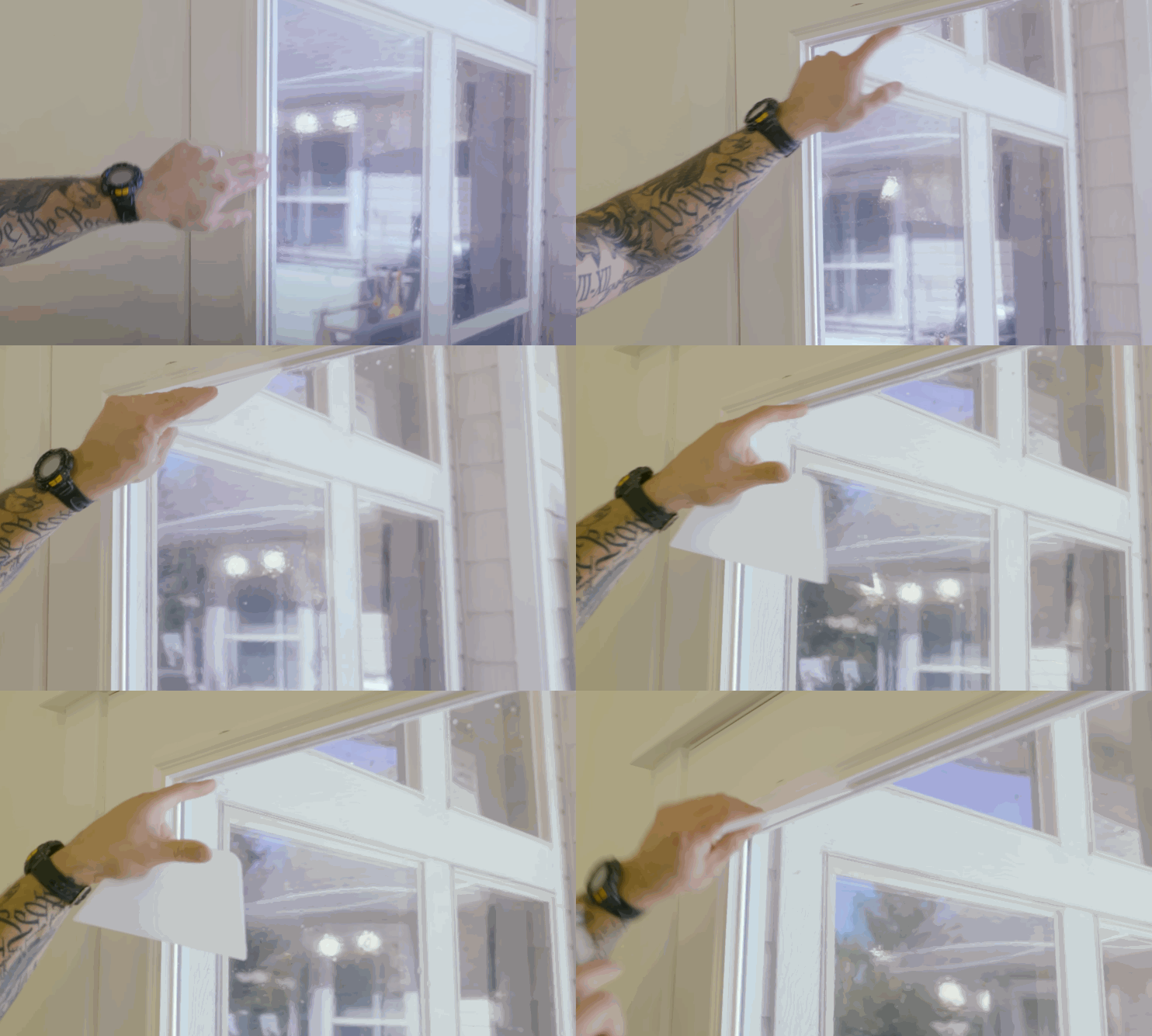
Security window film is built with a different objective in mind. Instead of focusing on comfort, it’s designed to strengthen your glass and improve safety. The film itself is much thicker than standard residential window tinting, and once installed, it helps hold the glass together if it’s struck or broken.
That added thickness is what gives security window film its protective qualities. When glass breaks, instead of shattering into loose, dangerous pieces, the film helps keep it intact, reducing the risk of injury and making it harder for the glass to be pushed inward. It doesn’t make your windows unbreakable, but it does change how they fail under pressure.
You’ll often hear terms like safety window film, shatter resistance, and glass protection associated with this type of installation. All of them point to the same idea, reinforcing the glass so it performs more predictably under impact. While some versions of security window film also offer UV protection or light control, its primary role is always protection, not comfort.
Key Differences Between Security Window Film and Traditional Window Tint
Even though both products fall under the category of window film installation, they’re built for different priorities. Understanding those differences is what helps you choose the right solution for your home.
Here’s how they compare in practical terms:
- Purpose, residential window tinting is focused on comfort and efficiency, while security window film is designed for protection and safety
- Thickness, traditional window tint is thinner and optimized for light and heat control, while security films are thicker for impact resistance
- Performance, solar films are engineered for heat rejection and glare reduction, while security films are designed to hold glass together under stress
- Appearance, residential window tinting can be nearly invisible or slightly shaded, while security window film is typically more subtle and focused on function
In many cases, homeowners assume they need one type of film when the other might actually solve their problem better. That’s why it’s important to look beyond appearance and focus on what you want the film to do on a daily basis.
Performance in Malden Homes and Seasonal Conditions
Malden’s climate plays a big role in how effective window film can be. During the summer, homes can heat up quickly, especially those with direct sun exposure throughout the afternoon. In the winter, heat loss through untreated glass can also become a factor, making it harder to maintain consistent indoor temperatures.
Residential window tinting helps regulate that balance by reducing solar heat gain during warmer months while still allowing natural light into the space. It doesn’t replace insulation, but it does support a more stable indoor environment, which can make a noticeable difference in how your home feels day to day.
A lot of homes in Malden also feature older window designs or larger glass areas, which tend to let in more sunlight than modern builds. That’s where window film installation becomes a practical upgrade rather than a cosmetic one. Beyond temperature control, both residential window tinting and security window film also help block UV rays, which can gradually damage flooring, furniture, and other interior materials.
Over time, that protection adds up. Whether you’re trying to make your living space more comfortable or looking to reinforce your windows, choosing the right type of film based on your home’s layout and exposure is what makes the biggest difference.
When Residential Window Tinting Makes the Most Sense

In our experience, residential window tinting makes the biggest impact when comfort is your main priority. If certain rooms in your home feel too bright during the day, or you find yourself constantly adjusting blinds to manage sunlight, that’s usually a sign that solar control should be part of the solution. The goal here isn’t to darken your home, but to make it more usable throughout the day without sacrificing natural light.
We see this especially in living rooms, home offices, and spaces with large windows where glare becomes an issue. Reducing that glare can make a noticeable difference, whether you’re watching TV, working on a laptop, or just trying to relax. Over time, that improvement in visibility and comfort is something homeowners really start to appreciate.
From a practical standpoint, residential window tinting also helps manage energy use during the warmer months. By reducing how much heat enters through the glass, your cooling system doesn’t have to work as hard to maintain a comfortable temperature. That can translate into more consistent indoor conditions and, in many cases, lower energy costs over time.
Here’s where residential window tinting tends to make the most sense:
- Rooms with direct sunlight exposure that overheat during the day
- Living areas where glare affects screens or visibility
- Homes looking to improve energy efficiency without major upgrades
- Spaces where UV protection helps preserve flooring and furniture
- Homeowners who want a cleaner, more balanced look without heavy window coverings
At the end of the day, it’s about making your space easier to live in. When comfort, efficiency, and everyday usability are the priority, residential window tinting is often the most practical choice.
Why Professional Window Film Installation Matters
No matter which type of film you choose, the quality of the installation plays a major role in how well it performs. We’ve seen cases where a high-end film doesn’t deliver the expected results simply because it wasn’t installed correctly. With window film installation, preparation and technique are just as important as the product itself.
Proper installation starts with surface preparation. The glass has to be thoroughly cleaned and free of contaminants, because even small particles can affect adhesion. From there, the film needs to be applied in a controlled environment to avoid dust, air pockets, and imperfections that can lead to bubbling or peeling over time.
DIY installations often run into issues like misalignment, trapped debris, or edges that don’t seal properly. These problems don’t always show up right away, but they can reduce both the performance and lifespan of the film. That’s why professional installation is such an important part of the process.
When we handle window film installation at Pelicar Window Tinting, we focus on consistency and detail from start to finish. Every surface is prepared correctly, every cut is precise, and every installation is done with long-term performance in mind. That’s what allows both residential window tinting and security window film to perform the way they’re designed to.
Conclusion: Choosing the Right Solution for Your Home
When you break it down, the difference between residential window tinting and security window film comes down to what you need your windows to do. One is focused on improving comfort, managing heat, and making your living space more enjoyable day to day. The other is built around protection, reinforcing your glass, and adding an extra layer of safety where it matters most.
There isn’t a one-size-fits-all answer, and in many cases, the right choice depends on your home’s layout, your priorities, and how you use each space. Some homeowners are looking for better energy efficiency and glare control, while others are more focused on security and peace of mind. Both are valid, and both can be addressed with the right type of window film.
If you’re not sure which direction makes the most sense, that’s where having a conversation helps. At Pelicar Window Tinting, we work with homeowners throughout Malden to evaluate their space, understand their needs, and recommend the right window film installation for their goals.
If you’re considering residential window tinting or security window film for your home, reach out to Pelicar Window Tinting today. We’ll help you find the right solution and handle the installation with the level of care your home deserves.
4.7 STARS 773 Google reviews
Window tinting service in Malden, Massachusetts