There’s a big difference between driving in Massachusetts and driving in, say, a place with smoother roads and milder seasons. Around here, your car is constantly dealing with variables that don’t show up on a spec sheet, but absolutely show up on your paint.
Think about a typical week. You’re merging onto I-90, dealing with stop-and-go traffic on I-95, or cutting through Route 128 during rush hour. Add in leftover winter sand, random gravel from roadside work, and the occasional chunk of asphalt from a pothole repair, and suddenly your paint is taking hits whether you notice it or not.
That’s usually the moment when Paint Protection Film enters the conversation. Not as a flashy upgrade, but as a practical way to deal with the kind of wear Massachusetts drivers see every day. From our side at Pelicar, it’s less about “adding something extra” and more about solving a problem that’s already happening.
Why Rock Chips Are So Common on Massachusetts Roads
Rock chips don’t just happen randomly. In Massachusetts, they’re almost built into the way the roads function throughout the year.
Start with winter. The combination of salt and sand keeps roads drivable, but it also leaves behind a layer of loose material that sticks around well into spring. Then come the repairs, patch jobs, construction zones, temporary fixes that never feel that temporary. Every one of those adds more debris into circulation.
Now combine that with how people actually drive here:
- Long highway commutes with consistent high-speed exposure
- Tight following distances in heavy Boston-area traffic
- Frequent lane changes around construction and merges
- Daily driving on roads that are constantly being repaired or resurfaced
All of that increases the chances of rock chip damage in a way that’s hard to avoid. The reality is, vehicle paint damage in Massachusetts isn’t about aggressive driving, it’s about consistent exposure. That’s why road debris protection becomes less of a luxury and more of a logical step if you care about how your car holds up over time.
What Paint Protection Film Actually Does for Your Vehicle
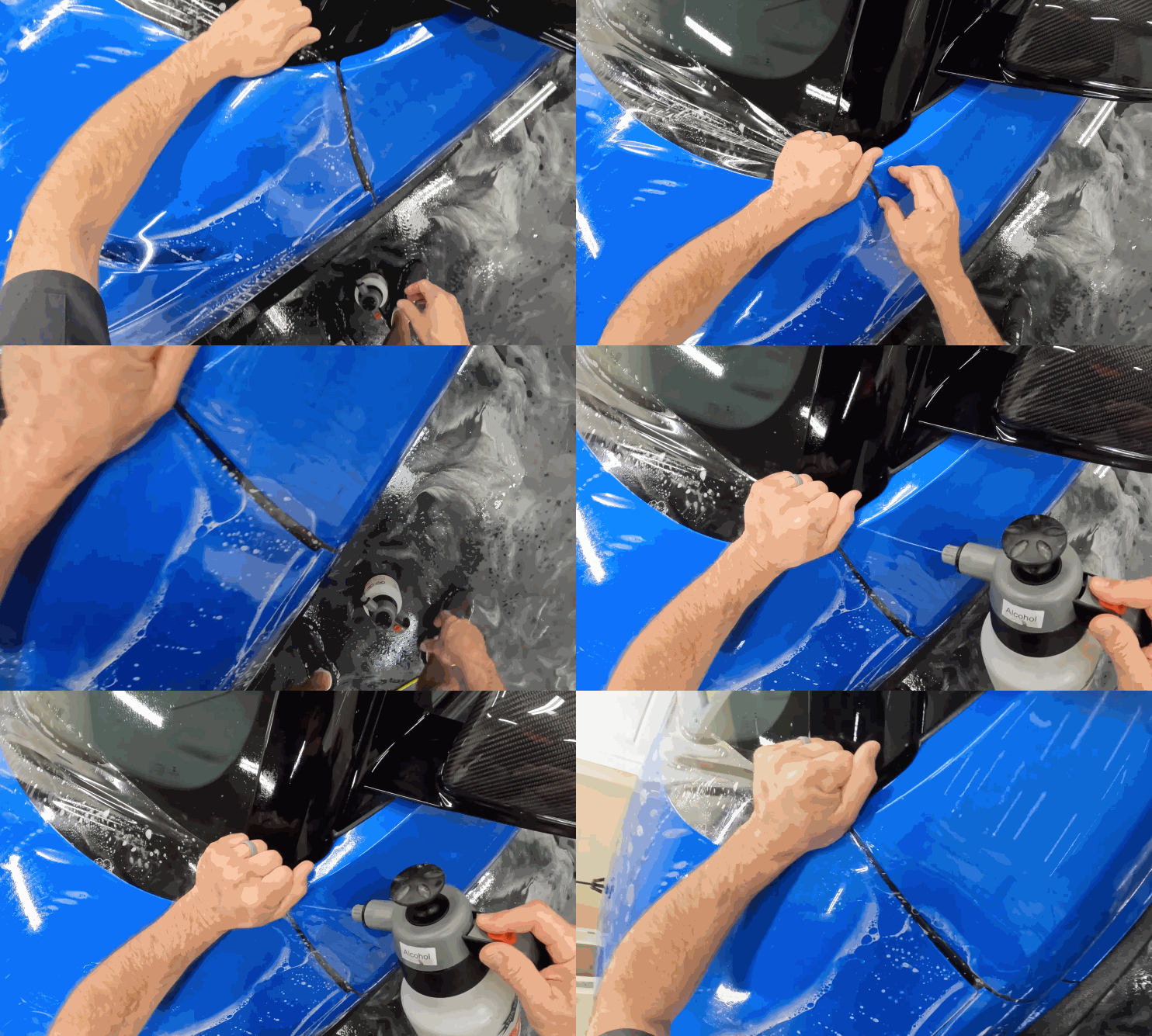
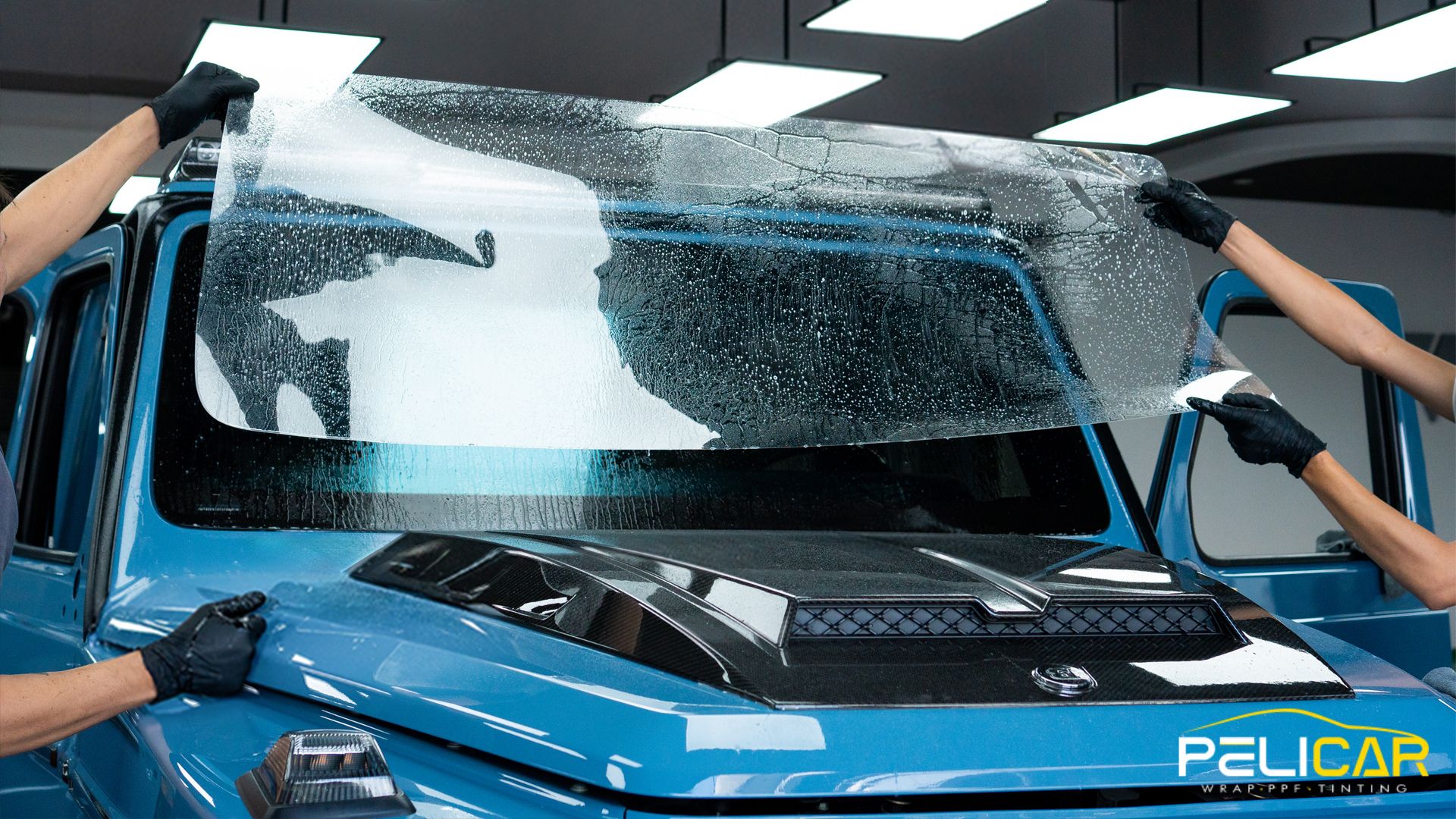
Instead of thinking about Paint Protection Film as a “coating” or a “treatment,” it helps to think of it as a buffer. It sits between your paint and everything the road throws at it, literally.
The film is engineered to flex on impact. When something hits it, the force gets spread out instead of concentrated in one tiny point, which is what normally causes chips. That’s the difference between seeing a white mark on your hood versus nothing happening at all.
You’ll often hear terms like clear bra or surface protection film, and while the names vary, the goal stays the same: protect the original finish without changing how the car looks.
Working with installations day in and day out at Pelicar, what stands out is how consistent the results are when the right film is used. The paint underneath stays smoother, and the kind of small imperfections that usually build up over time just… don’t show up the same way.
That said, it’s not magic. It won’t stop extreme impacts, and it’s not meant to. What it does is handle the everyday abuse that, over time, makes the biggest difference in how your vehicle looks
Can Paint Protection Film Really Prevent Rock Chips?
Short answer, it helps a lot, but it’s not absolute.
The better way to look at it is in terms of probability. Without protection, almost every piece of debris that hits your paint has the potential to leave a mark. With a properly installed film, a large percentage of those impacts get absorbed before they turn into visible damage.
Performance depends on a few variables working together:
- The thickness of the film, which directly affects impact resistance
- The composition of the material, especially how it balances flexibility and strength
- The quality of the PPF installation, which determines how well the film sits and adheres
- The specific areas covered, since not all parts of the car face the same level of exposure
Where we’ve seen people get the most value is when they combine good material with precise PPF installation. If either one falls short, the results usually do too.
So no, it doesn’t make your car immune to rock chips. But in real-world driving, especially on Massachusetts highways, the reduction is noticeable enough that most drivers don’t want to go back once they’ve had it.
Where Paint Protection Film Makes the Biggest Difference
Not every inch of your car is under constant attack. Some areas take the majority of the impact, and once you start paying attention, it becomes pretty obvious where the damage tends to show up first.
Driving on routes like I-93 or Route 3, your front end is essentially leading the charge. Every piece of debris in the lane ahead has a direct path to those surfaces. That’s why protection strategies are usually focused, not random.
- Front bumper and leading edge of the hood take the highest number of direct hits
- Side mirrors and front fenders catch debris deflected from other vehicles
- Lower doors and rocker panels get hit by material kicked up from the road surface
- Headlights absorb constant micro-impacts that dull their clarity over time
This is where different PPF coverage options come into play. Some drivers want to protect just the most exposed zones, while others prefer extending that protection further depending on how often they’re on the highway.
At Pelicar, most of the conversations we have around this aren’t about selling more coverage, they’re about matching the protection to how the car is actually used. Massachusetts driving isn’t uniform, so the approach shouldn’t be either.
Why Professional PPF Installation Matters More Than You Think
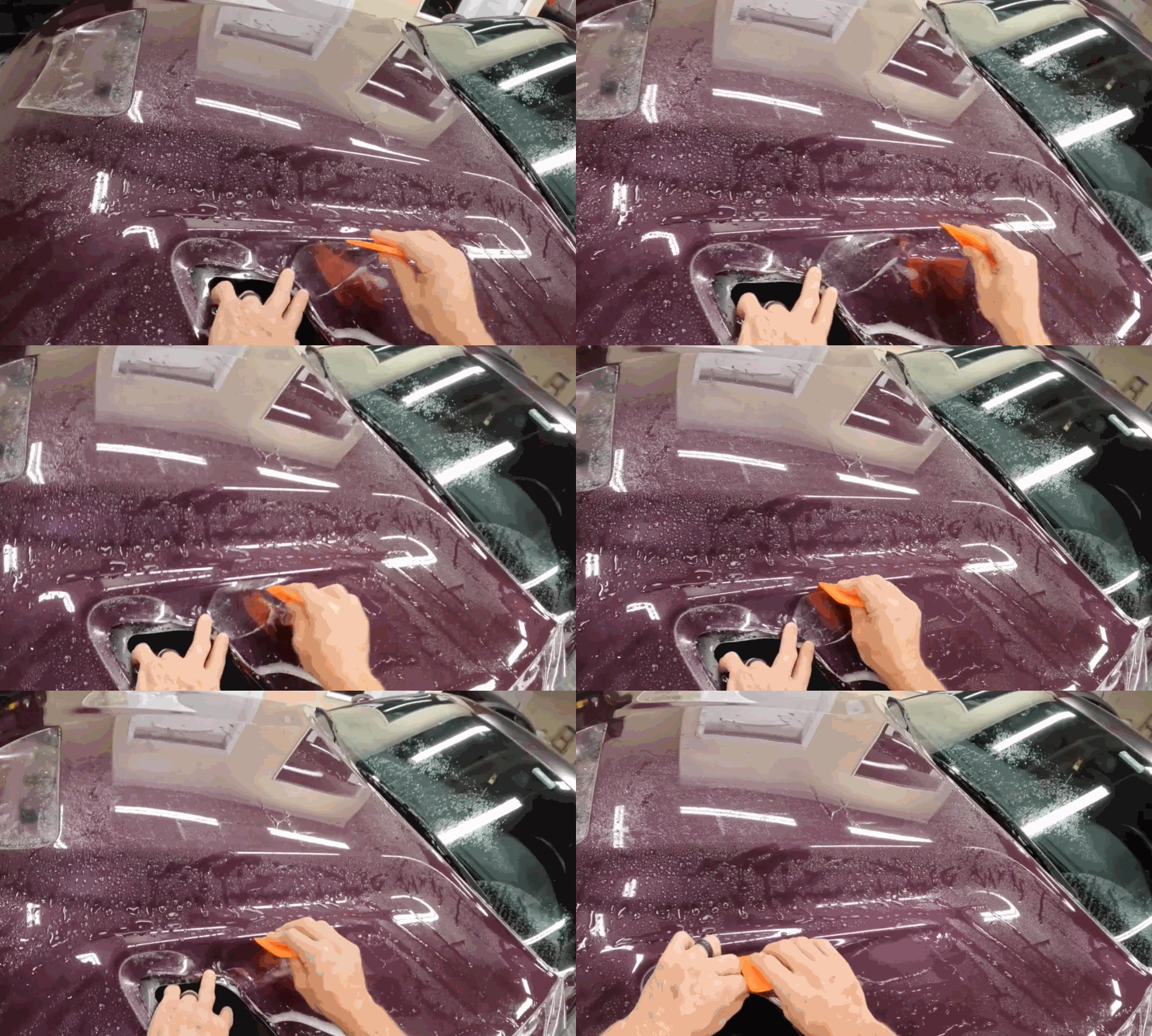
There’s a moment most people don’t see, right before the film ever touches the car, where everything is decided. The environment, the prep work, the precision of the cuts, that’s what separates a clean result from something you’ll notice every single time you walk up to your vehicle.
A proper professional PPF installation isn’t rushed, and it’s definitely not improvised. It happens in a controlled space where dust, temperature, and lighting are all managed. Because the truth is, even a tiny contaminant under the film can turn into a visible flaw that never really goes away.
Here’s where things usually go wrong when installation isn’t done properly:
- Edges that start lifting after a few weeks, especially around curves and corners
- Small particles trapped underneath the film, creating bumps or distortion
- Misaligned sections that break the seamless look of the vehicle
- Visible seams that stand out instead of blending into the paint
And once those issues show up, there’s no quick fix. Most of the time, it means removing and reinstalling the film entirely.
That’s why, when we handle a PPF installation Massachusetts project at Pelicar, the focus isn’t just on applying the film, it’s on getting every step right before that even happens. The prep, the alignment, the finishing, it all plays into how the film performs months and years down the line. Because durability doesn’t start after installation, it starts during it.
Common Mistakes to Avoid When Considering Paint Protection Film
When people look into Paint Protection Film, the focus is usually on the end result, how the car will look and how well it will be protected. But in reality, most of the long-term issues we see don’t come from the film itself, they come from decisions made before the installation even starts.
Choosing Price Over Performance
It’s completely normal to compare options based on cost. The problem is that not all films are built the same. Lower-quality materials tend to lose clarity faster, don’t absorb impact as effectively, and can wear down much sooner than expected.
Over time, what seemed like a good deal can turn into something that needs to be replaced earlier than planned.
Coverage That Doesn’t Match How You Drive
Not every car needs full coverage, but not every car should have minimal coverage either. The mistake here is choosing a package without thinking about where and how the vehicle is actually driven.
Highway commuters, especially around Massachusetts, typically need more front-end protection than someone who drives occasionally on local roads.
Overlooking Surface Preparation
This is one of the most underestimated steps. Paint Protection Film locks in whatever is underneath it. If the surface hasn’t been properly cleaned or corrected, those imperfections don’t disappear, they become part of the final result.
A proper prep process is what allows the film to sit cleanly and perform the way it’s designed to.
Not Evaluating the Installation Process
This is where a lot of people assume all shops operate the same way, and that’s rarely the case.
- Some installations are done in controlled, clean environments
- Others are done in less controlled conditions where contamination is more likely
- Precision cutting and alignment can vary significantly between installers
- Finishing details, especially around edges, make a big difference over time
At the end of the day, Paint Protection Film is only as good as the decisions behind it. When those decisions are made carefully, the results tend to hold up for years. When they’re rushed, the issues usually show up when it’s already too late to avoid rework.
Conclusion: A Smarter Way to Protect Your Vehicle Year-Round
Driving in Massachusetts means accepting that your vehicle is going to face constant exposure, weather, debris, traffic, all of it adds up. The difference is whether you let that wear happen directly on your paint, or you put something in place to absorb it.
Paint Protection Film isn’t about perfection, it’s about control. It gives you a way to manage the kind of damage that’s otherwise unavoidable on roads like I-90, I-93, or Route 128.
At Pelicar, we’ve worked with enough Massachusetts drivers to know that once people experience that difference, they don’t really want to go back to unprotected paint. If you’re thinking about protecting your vehicle the right way, this is where that conversation starts.
If you’re ready to take that next step, contact us and we’ll walk you through the best approach for your car and how you actually drive.
4.7 STARS 773 Google reviews
Window tinting service in Malden, Massachusetts